My Canadian husband and I lived in the massive multicultural city of Toronto, Ontario, when we first married. As a United States citizen who only planned to stay a short time before we moved back to the US for my husband to start his seminary education, I was on a visitor visa, which meant I couldn’t work.
Having loads of time to myself might have been appealing had I not just finished living a life that was full to the brim of activity and responsibility. I didn’t know what to do with myself! Further, I was a newlywed who was finally realizing the magnitude of the decision I’d made to leave my close family safety net in the farming country of southeast Michigan.
I was living in a totally different world, with my new best friend who had been a bachelor for quite a few years, very apart from me. Now I had to fit into his world, figure out who we were as a couple and do it all in a mostly foreign country. At least they all spoke English!
I’d have to say that I had somewhat of an identity crisis at the time. As I wrestled with God through all my emotions and thoughts, one verse in particular encouraged me. It’s our theme verse for our new article season for 2025-26: “But our citizenship is in heaven, and from it we await a Savior, the Lord Jesus Christ, who will transform our lowly body to be like his glorious body, by the power that enables him even to subject all things to himself” (Philippians 3:20-21).
It dawned on me as I read that first phrase that my citizenship is not really on this earth. I’d spent my whole life being taught to define myself based on my nationality or the community in which I was raised. Of course, that isn’t a bad thing. We’re created to live in communities and be defined by them to a certain degree.
Thankfully, I was also taught that as a follower of the One True God, I am part of a group of people from every tribe and tongue and nation who call Jesus Christ Lord. Though I’d lived four years in the city of Chicago in a Bible school where I interfaced with Christians from all over the world, by the time I got married and moved to Toronto, I still was realizing a crisis of identity once the things were stripped away that were familiar to me and that made up my national culture.
I had to learn new ways of thinking and relating, new products, new places to go to do everyday things because where I was living was not like where I grew up. Adjusting was necessary for me to live where I was, but seeing this verse taught me that I was defined by something so much greater than which nation I came from or in which family or church or community I was raised.
I began to see how much I found my identity in the things I did or the place I came from instead of seeing how I was in light of being a follower of Christ. It was far too easy for me to equate the values, mindsets, and ways of living with being a follower of Jesus when a lot of those things were, in fact, not necessarily because I was a Christ-follower but because I was an American or a Baptist or a Midwesterner.
Over the years, as my husband and I have lived in both the US and Canada in various subcultures and among individuals within those lands who were from different nations as well, I have often felt like a bit of a chameleon, adapting to look like my environment in order to fit in and be a part of the culture and subcultures in which I was living.
Which makes me ask the question again: Am I defined by the cultures that have shaped me and by the roles I fill or by my identity as a citizen of Heaven, as a follower of its King, the Lord Jesus Christ?
As we explore the many-faceted aspects of this principle as noted in Philippians 3:20-21 this season, keep before you one of the things I love most about Flowers, a value to which we have been committed since we first came together as pastors’ wives years ago:
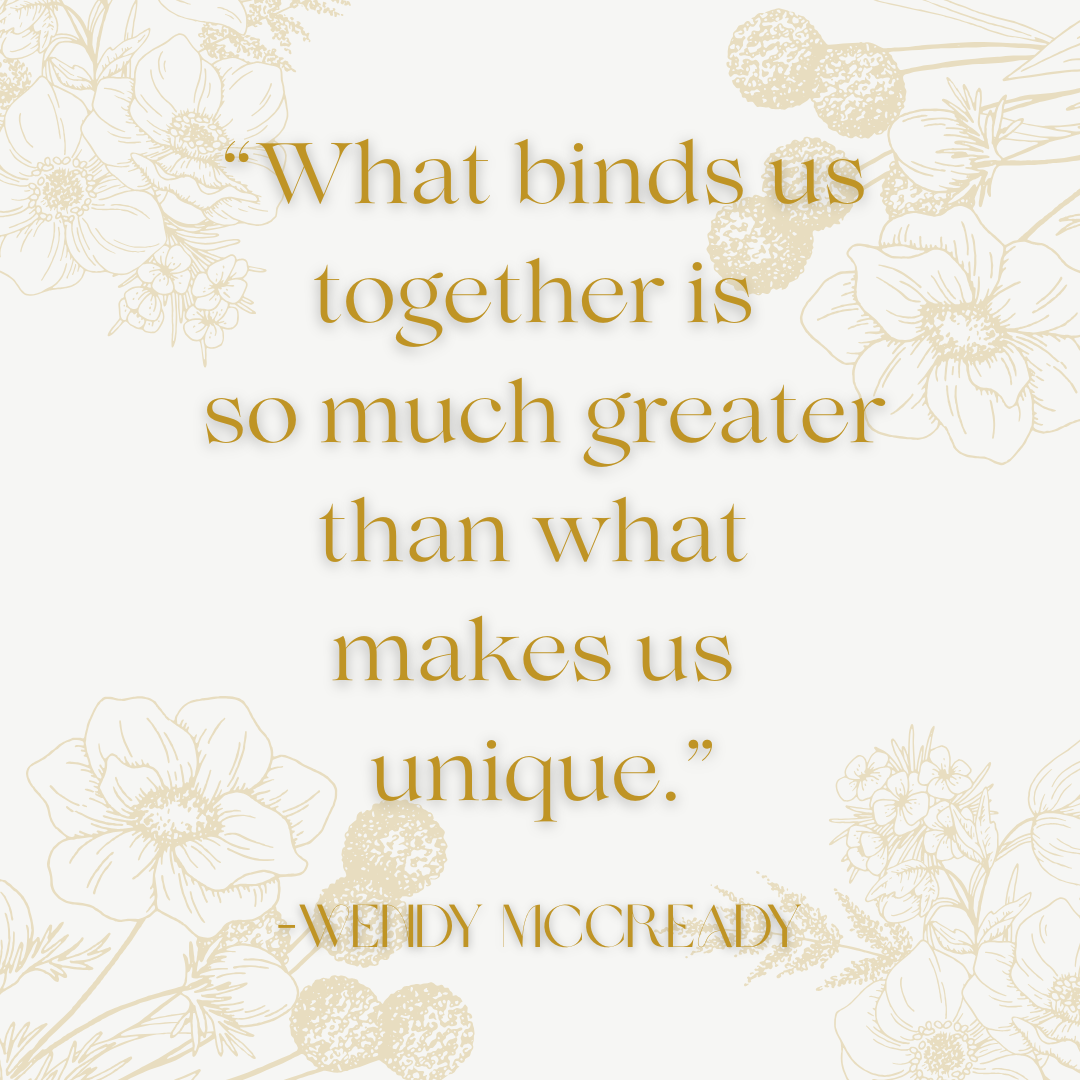
Our Flowers team consists of women from different countries, churches, and family cultures. What binds us together is so much greater than what makes us unique. We are all citizens of Heaven—members of the ekklesia “called out ones” who reflect His image in all its glorious fullness.
The views expressed this season will reflect some of those differences, but that is exactly the point: we are united in reflecting the whole glory of the Body of Christ. As a whole, every nation and tribe and tongue, every local church of believers in these nations, regardless of denomination or size, together reflect the whole of the image of God.
If we discount one nation or one denomination over another, then we discount part of His image. Of course, we reflect it imperfectly now, but we dare not overlook the glory of Christ seen in each, or we defame and tarnish that glory.
As you read our articles this season, ask yourself: Where do I truly place my identity? How do I see others? Do I judge based on my specific identity and role or on the characteristics of the citizens of Heaven as Spirit- and fruit-filled, grace-loving and giving people (Galatians 5:22-23)?
May the God of all the nations give us eyes to see until our faith is turned to sight (2 Corinthians 5:7).
Amen, come soon, Lord Jesus!
Taking it Further: Where do I truly place my identity? How do I see others? Do I judge based on my specific identity and role or on the characteristics of the citizens of Heaven as Spirit- and fruit-filled, grace-loving and giving people (Galatians 5:22-23)?